Three knife sharpening models to keep them sharp.
At Le Monde du Couteau, whether you opt for a honing steel or a Japanese sharpening stone, the technique ofsharpening to maintain your Japanese knives or kitchen knives remains the same. Simply rub the edge of your knife at a constant angle between 15 and 20 degrees.
The honing steel can be used as is, whereas the Japanese sharpening stone needs to be soaked in water for at least 5 minutes before use.
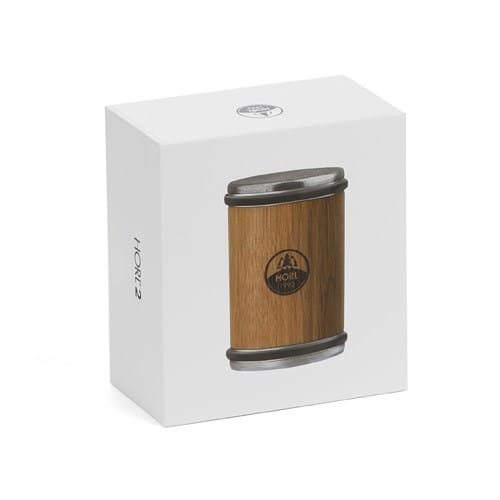
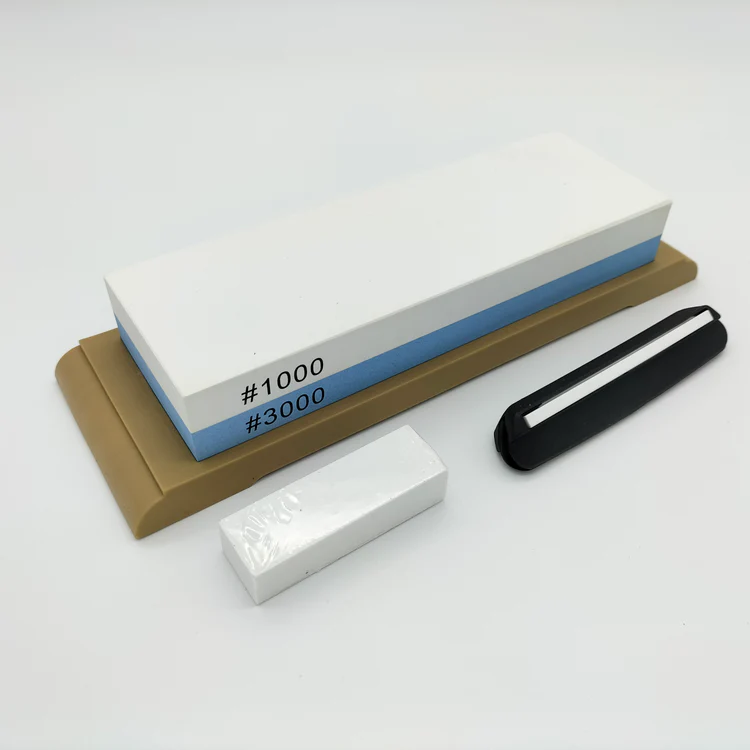
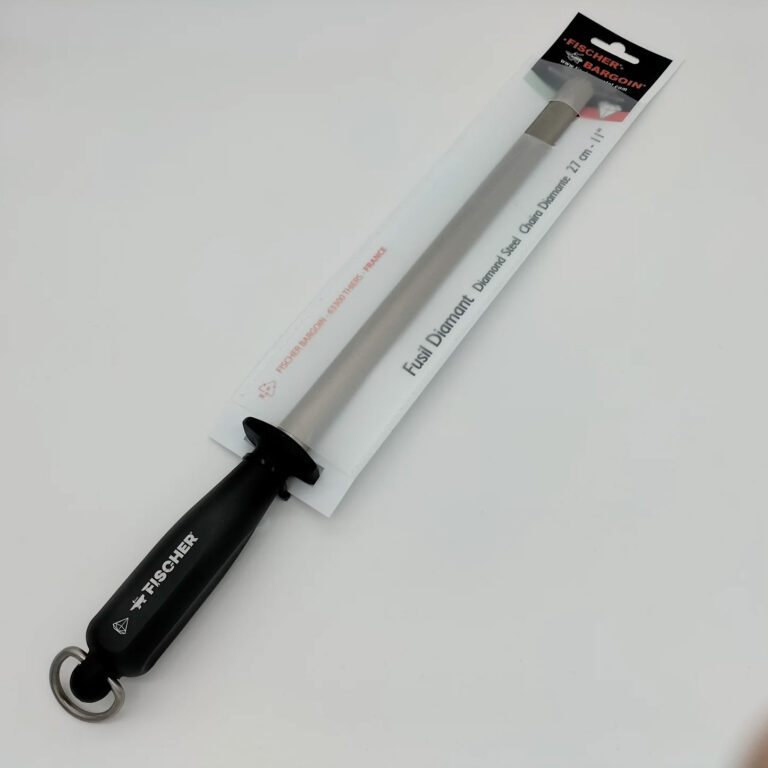
The different sharpening methods for Japanese knives and kitchen knives
Whether for traditional Japanese knives or kitchen knives standards, sharpening is crucial to maintain their optimum cutting performance. Two main sharpening methods are widely used: using a honing steel and using a whetstone.
The honing steel for regular maintenance
The honing steel is a tool of choice for regular knife maintenance. It is particularly effective at realigning the knife’s metal edge, but it does not actually remove material. Using a constant angle of 15 to 20 degrees, gently slide the knife along the honing steel to achieve a clean edge and preserve blade quality.
The sharpening stone for precise sharpening
The sharpening stone, particularly the Japanese stone, provides more precise, customised sharpening. Before use, it generally needs to be soaked in water for a specific length of time. Then, using circular or back-and-forth movements at the required angle, this stone allows the knife edge to be refined to suit every need. It is ideal for restoring a dull edge and achieving a remarkably clean cut.
Both offer effective solutions for maintaining and sharpening Japanese and kitchen knives, thereby extending their lifespan and ensuring precise, smooth cutting every day.